
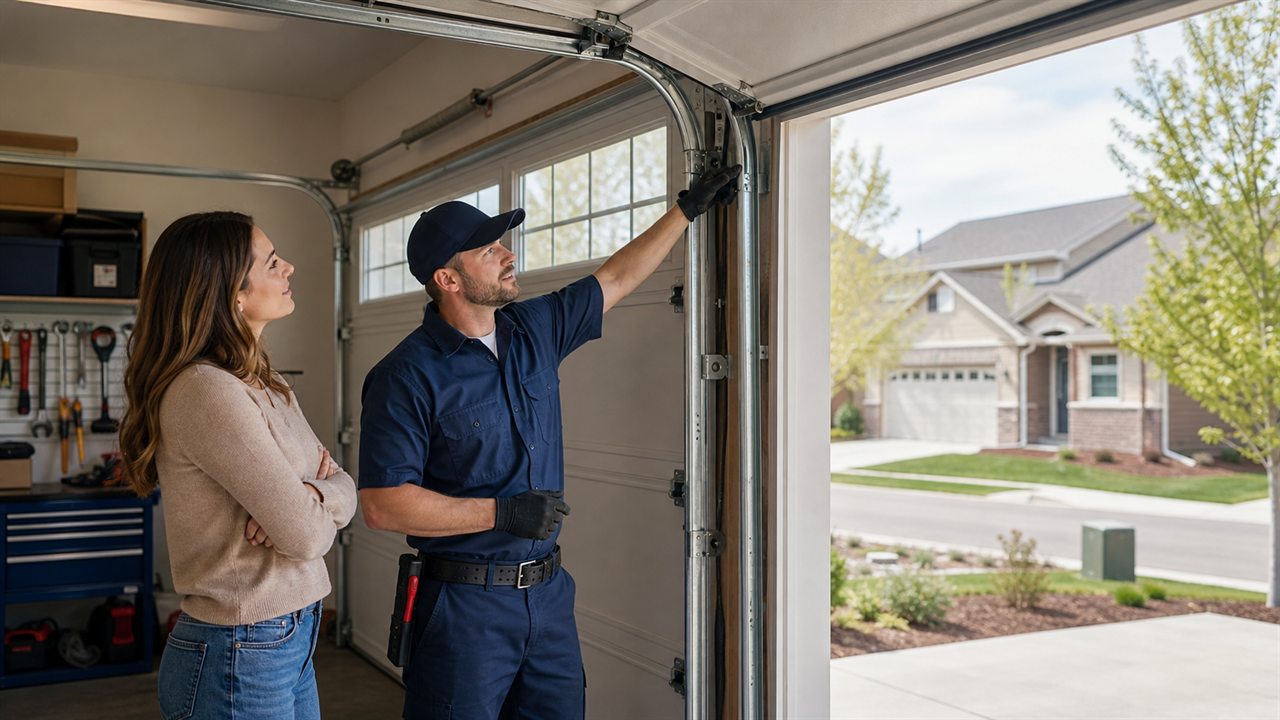
Small garage door symptoms can turn into unsafe failures
For many Colorado homes, the garage door is the main entrance. It opens before school, after work, during snowstorms, and when the driveway is full of gear. When that door starts acting different, the warning signs are worth taking seriously.
Residential garage door repair is usually most effective when the issue is caught early. Waiting until the door stops moving can turn a simple adjustment into a bigger safety problem.
Warning signs that deserve attention
1. The door feels heavier than it used to
If the opener sounds strained or the door feels heavy when lifted manually, the spring system may be losing tension. Do not keep increasing opener force to compensate. That makes the motor work harder and can hide a spring problem until the door will not lift at all.
For spring-related issues, review our garage door spring repair service before trying any DIY adjustment.
2. The door jerks, shudders, or moves unevenly
Uneven movement can point to roller wear, cable tension problems, bent tracks, or a door section that is no longer staying square. Colorado temperature swings can loosen hardware and make these symptoms worse over time.
3. Cables look frayed or loose
Garage door cables should sit tightly in the drum grooves and should not show broken strands. Frayed cables are not cosmetic. They are part of the lifting system and can fail suddenly under load.
4. The opener hums but the door does not move
This can happen when the opener gear is worn, the trolley is disconnected, the door is locked, or the door itself is too heavy for the motor to move. If the opener hums repeatedly, stop testing it and inspect the door manually only if it is safe to do so.
Our garage door opener repair guide covers common opener symptoms and when the opener is likely not the only issue.
5. The door reverses after touching the floor
If the door closes and immediately comes back up, the opener travel limits, force settings, bottom seal, floor contact, or safety sensors may need adjustment. Do not bypass the sensors. They are part of the safety system.
6. Light shows under the door
Light gaps can mean worn bottom seals, shifted tracks, floor settling, or a door that is no longer closing evenly. That allows dust, snow, pests, and cold air into the garage.
7. A panel is bent or separating
Panel damage can affect more than appearance. A cracked or bent section can cause the door to flex unevenly as it turns through the track. If the damage is structural, the door can bind or pull hardware out of alignment.
For section damage, the garage door panel repair page explains when panel work makes sense.
What a residential repair appointment should check
A good residential repair visit should look at the whole system, not just the loudest part. The technician should check door balance, springs, cables, rollers, hinges, tracks, opener force, sensor alignment, weather seals, and the door’s final travel.
That system-level inspection matters because the symptom and the cause are not always the same.
When to schedule service quickly
Schedule residential garage door repair if the door is heavy, crooked, stuck, noisy, or unreliable. Schedule emergency help if the door is open and cannot close, the car is trapped, a spring or cable broke, or the door is hanging off track.
For broader repair options across the Front Range, start with our garage door repair service.
Colorado Garage Door Fix can help
Colorado Garage Door Fix handles residential garage door repair across Denver Metro and nearby Front Range communities. We inspect the full door system, explain what failed, and repair the issue with safety and long-term operation in mind.
Call (970) 409-1369 if your home garage door is getting heavy, loud, crooked, or unpredictable.