
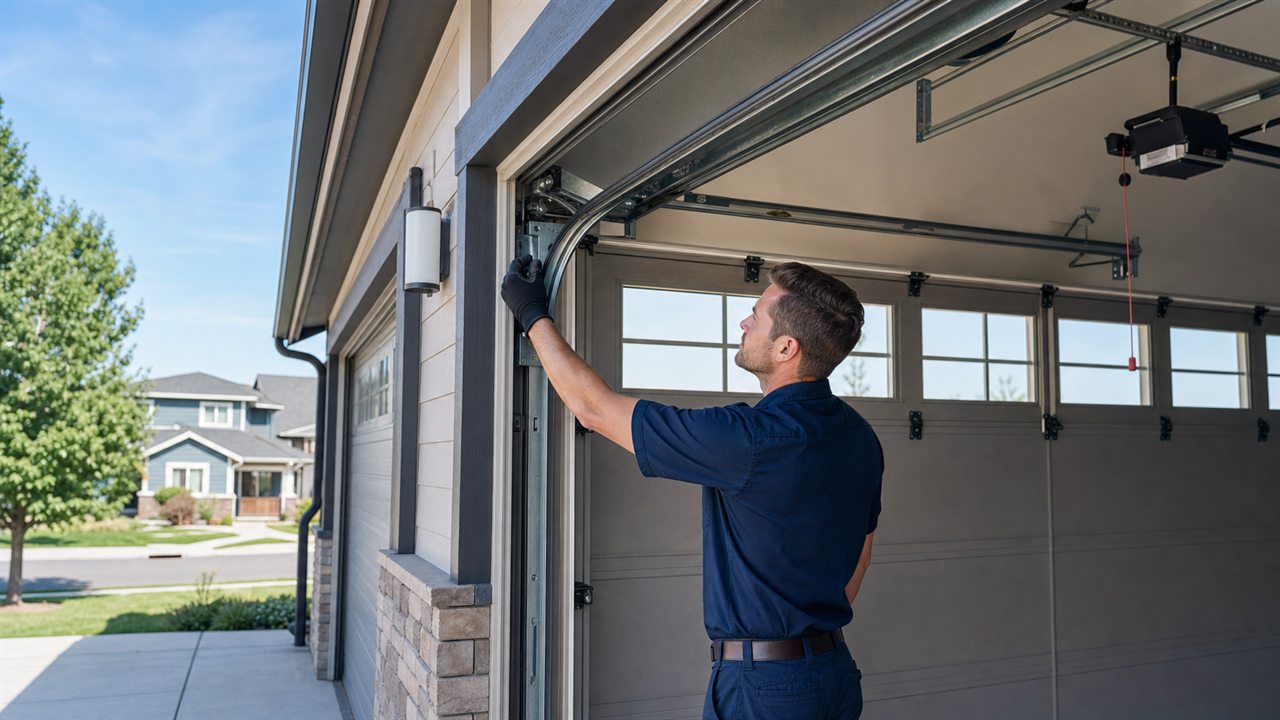
A garage door tune-up is more than lubrication
When Denver homeowners search for garage door service, they usually want the door to run quieter, close reliably, and stop feeling like the next cold morning will break something. A good tune-up should do more than spray a few hinges. It should catch worn parts before they turn into a stuck car, a crooked door, or a damaged opener.
Denver doors deal with dry air, road dust, freeze-thaw cycles, hail exposure, and older alley-access garages. That mix makes regular service useful even when the door still opens.
What a professional garage door service visit should include
1. Full door balance test
The technician should disconnect the opener and lift the door by hand. A balanced door should move smoothly and hold near the halfway point. If it drops, shoots up, or feels unusually heavy, the spring system needs attention.
This matters because an opener is designed to guide a balanced door, not lift dead weight every day.
2. Spring and cable inspection
Springs and cables carry the dangerous tension in the system. A service visit should include a visual check for gaps in torsion springs, rust, stretched extension springs, frayed cable strands, loose drums, and uneven lift.
If you already suspect a spring issue, start with our garage door spring repair service rather than trying to adjust tension yourself.
3. Track, roller, and hinge check
Colorado dust and grit can make rollers drag. Loose brackets can also pull tracks out of alignment over time. The technician should inspect:
- Bent or pinched track sections
- Cracked nylon rollers
- Loose hinge screws
- Roller stems starting to wobble
- Gaps between rollers and track
Small alignment issues are much easier to fix before the door jumps the track.
4. Opener force, travel, and safety settings
A service visit should verify that the opener is not overworking. That means checking force settings, travel limits, chain or belt tension, rail stability, photo-eye alignment, and auto-reverse behavior.
If the door hums, reverses, or stops before the floor, our garage door opener repair page explains when the problem is likely the opener versus the door hardware.
5. Weather seal and panel review
Denver wind, snow, and sun can dry out bottom seals and side seals. A proper inspection should look for light under the door, cracked rubber, panel separation, and dents that affect the door’s ability to move squarely.
This is especially important for attached garages where drafts, pests, and water intrusion can spread beyond the garage.
How often should Denver garage doors be serviced?
For most homes, once a year is the right baseline. Heavier doors, older wood doors, high-use household entries, and homes exposed to heavy dust or winter moisture may need service twice a year.
The best time to schedule is before temperature extremes: late spring after freeze-thaw wear, or early fall before the first hard cold snap.
When service should become repair
A tune-up is not the right answer for every problem. Call for garage door repair if you notice:
- A broken spring or visible cable damage
- The door falls when released from the opener
- The opener strains, smokes, or grinds
- The door is crooked in the opening
- A roller has popped out of the track
- The door will not close safely after sensor cleaning
For city-specific scheduling and repair coverage, see our garage door repair in Denver page.
Colorado Garage Door Fix service visits
Colorado Garage Door Fix services garage doors across Denver, Westminster, Lakewood, Arvada, Aurora, and the surrounding Front Range. A service visit includes safety checks, balance testing, hardware inspection, lubrication, opener testing, and clear repair recommendations if anything needs more than routine adjustment.
Call (970) 409-1369 or book online if your Denver garage door is getting noisy, heavy, or unreliable.