
A garage door problem becomes urgent when access or security changes
Some garage door issues in Centennial can wait for a normal appointment. Others should be treated as same-day service calls because the door no longer protects the home, moves safely, or lets the household use the garage.
If the door is stuck open, trapping a vehicle, hanging crooked, grinding under strain, or refusing to close securely, stop forcing the opener. A quick repair visit can prevent a contained spring, cable, track, roller, panel, or opener problem from spreading through the rest of the system.
For local scheduling, start with garage door repair in Centennial or the main Centennial garage door service page.
When Centennial homeowners should book same-day repair
Same-day service makes sense when the door affects safety, home security, vehicle access, or weather protection. The goal is not to turn every squeak into an emergency. The goal is to avoid repeated use when the door is showing signs that the counterbalance, track, or opener system may no longer be working correctly.
Request the earliest available appointment when:
- The garage door is stuck open and the home cannot be secured
- A car is trapped inside before work, school, or an appointment
- The door lifts a few inches, then stops or drops back down
- One side of the door sits lower than the other
- A torsion spring has a visible gap
- A cable is loose, frayed, tangled, or off the drum
- The opener hums, strains, clicks, or smells hot
- The door reverses without an obvious object in the way
- A panel is bent enough to affect movement or sealing
- The door is off track, rubbing, or moving unevenly
If the door is unstable, partially open, or blocking access, use emergency garage door service instead of trying to pull it into place.
Do not make the opener fight a damaged door
The opener is designed to guide a balanced garage door. It is not designed to lift the full weight of a failed spring system, drag a crooked door through misaligned tracks, or hold an unsupported door in place.
Repeated opener attempts can bend the top section, loosen hinges, damage the rail, overheat the motor, unwind cables, or make the door harder to stabilize when the technician arrives.
While waiting for service:
- Keep people and stored items away from the door path
- Leave springs, cables, drums, and bottom brackets untouched
- Do not stand under a partially open door
- Do not bypass safety sensors to make the door close
- Do not pull a crooked door down by hand
- Tell the dispatcher whether the door is open, closed, crooked, or trapping a vehicle
Those are safety steps, not repair instructions. Springs and lift cables are under serious tension and should be handled by a trained technician.
Centennial service calls often involve more than one part
The symptom you notice first is not always the part that failed. A door that will not open may have a broken spring, but it may also have cable tension issues, worn rollers, a bent track, a damaged panel, or an opener that is reacting to a heavy door.
Common repair paths include:
- Garage door spring repair when the door is heavy, drops, or only lifts a few inches
- Garage door cable repair when one side rises unevenly or the cable has slipped
- Track repair when the door binds, scrapes, or leaves the track
- Garage door opener repair when the motor, rail, limits, remotes, or safety reversal need diagnosis
- Garage door panel repair when an impact-damaged section affects movement or sealing
A useful repair visit should identify the failure, explain why it happened, and show whether any surrounding parts were stressed before work begins.
Centennial weather and daily use can expose weak hardware
Centennial garage doors deal with Front Range temperature swings, afternoon storms, wind, dust, hail risk, and cold mornings that can make older hardware louder or less consistent. Weather is usually not the only cause of a garage door failure. More often, it exposes springs, cables, rollers, hinges, seals, or opener settings that were already near the edge of reliable operation.
If the door acts normal later in the day, do not assume the issue is gone. Intermittent grinding, heavy movement, reversal, uneven travel, or gaps under the door can return at the worst possible time.
What a professional Centennial repair visit should include
The right outcome is a door that moves evenly, closes securely, and passes its safety checks without the opener forcing the system.
Expect the technician to inspect:
- Door balance and spring condition
- Cable tension, drums, bearings, and bottom fixtures
- Tracks, brackets, rollers, hinges, and fasteners
- Panel damage, flex, cracks, and weather sealing
- Opener force, travel limits, rail alignment, and controls
- Photo-eye alignment and safety reversal
- Final operation through multiple full cycles
The estimate should separate the immediate safety repair from optional improvements. If repair is the right move, the recommendation should be clear. If replacement is the better long-term decision, the reason should be tied to door condition, parts availability, safety, or total cost.
For pricing context before booking, review the garage door repair cost guide.
Book Centennial garage door repair before the issue spreads
If your Centennial garage door is stuck, heavy, crooked, grinding, off track, or no longer closing securely, stop forcing it. Early service can protect the opener, panels, tracks, cables, springs, and surrounding property from avoidable damage.
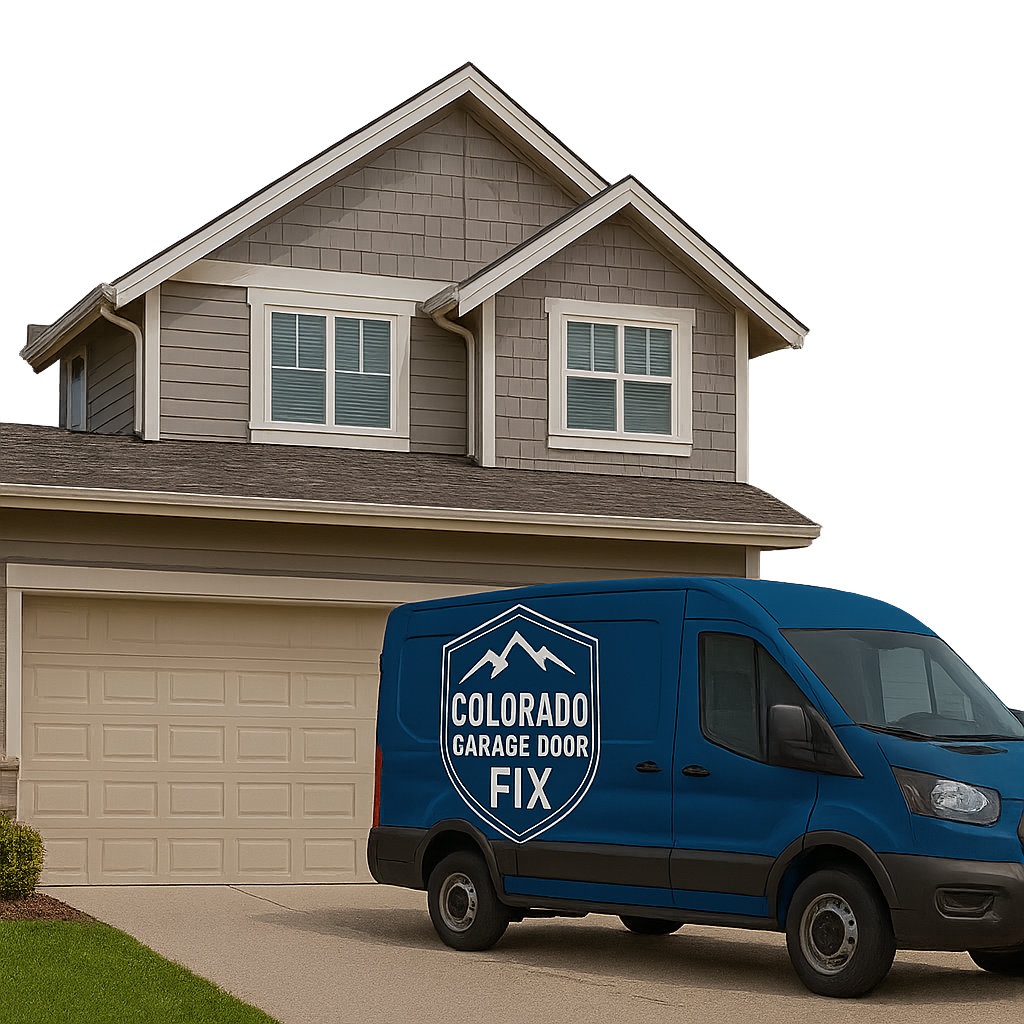
Colorado Garage Door Fix serves Centennial and the Denver Metro area with professional garage door diagnosis and repair. We inspect the full system, explain the safest repair path, and test the door before the visit is complete.
Call (970) 409-1369 if your Centennial garage door is trapping a vehicle, leaving the garage unsecured, or moving in a way that no longer feels safe.